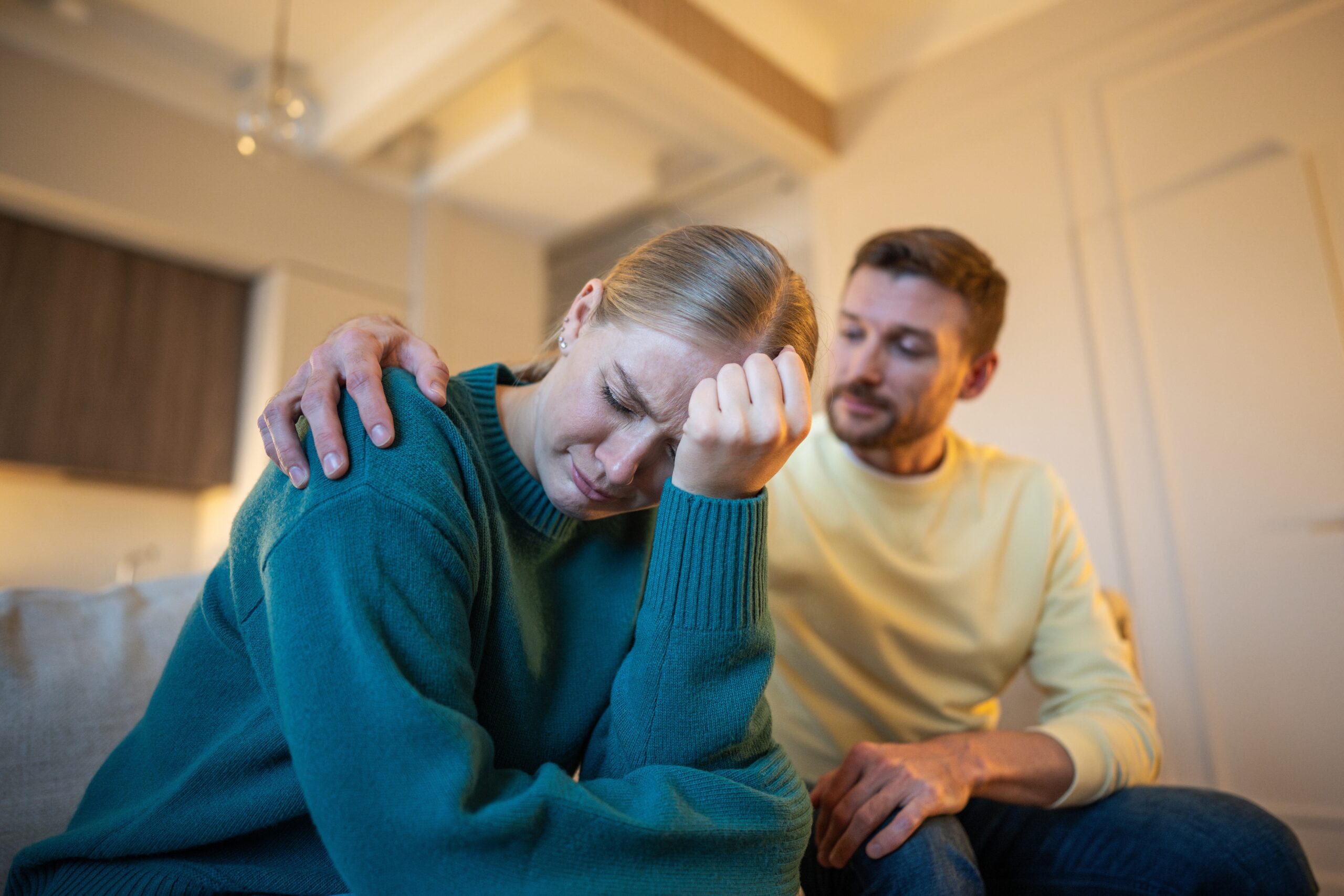

If you and your partner seem to circle back to the same argument no matter how many times you’ve “resolved” it, you’re not imagining things — and you’re certainly not alone. Many couples who come in for marriage counseling describe the exact same experience: the topic changes (money, chores, in-laws, time apart) but the pattern of the fight never does. One partner pushes for closeness and reassurance. The other pulls back to regain space. Both leave the conversation feeling more alone than when it started.
That pattern usually has less to do with the dishes in the sink and more to do with attachment styles — the blueprint each of us developed, often in early childhood, for how safe it feels to depend on another person. Understanding your attachment style, and your partner’s, is one of the most useful tools couples therapy has to offer, because it helps you see the fight underneath the fight.
What Attachment Styles Are (and Why They Matter in Marriage)
Attachment theory grew out of research on how infants bond with caregivers, but decades of subsequent research have shown that those early patterns keep showing up in our adult romantic relationships. Under stress, most of us default to one of a few attachment styles: secure, anxious, avoidant, or a mix of anxious and avoidant, sometimes called disorganized or fearful-avoidant.
None of these styles is a character flaw, and none of them is fixed forever. They’re adaptive strategies your nervous system learned for staying connected and safe. The trouble is that the strategy that once protected you as a child can quietly sabotage you as a spouse — especially when your style and your partner’s style pull in opposite directions during conflict.
The Four Attachment Styles and How They Show Up in Conflict
- Secure attachment: Generally comfortable with both closeness and independence. Can express needs directly and tolerate a partner’s occasional need for space without spiraling.
- Anxious attachment: Craves closeness and reassurance, and often reads a partner’s silence or distance as a sign of rejection. May pursue, over-explain, or escalate to get a response.
- Avoidant attachment: Values independence and self-sufficiency, sometimes to the point of discomfort with emotional intensity. Tends to withdraw, minimize, or intellectualize when conflict feels overwhelming.
- Disorganized (anxious-avoidant) attachment: Wants closeness but also fears it, often because early relationships felt unpredictable. Can swing between pursuing and withdrawing within the same conversation.
If this sounds familiar, it’s because most long-term couples eventually discover which combination they’re working with — and the most common, most exhausting combination by far is anxious paired with avoidant.
The Anxious-Avoidant Cycle: A Familiar Pattern in Couples Therapy
Here’s how it typically plays out: the anxiously attached partner notices distance and reaches for connection — a text, a question, a request to talk about “us.” The avoidantly attached partner feels the intensity of that reach as pressure, and instinctively creates space to self-regulate. That space registers to the anxious partner as confirmation of their worst fear — they’re pulling away — which triggers more pursuit. More pursuit triggers more withdrawal. Neither person is doing anything “wrong,” exactly; both are doing what has always kept them feeling safest. But together, the pattern can leave a marriage feeling like a treadmill of the same unresolved fight in different clothing.
This is exactly the kind of cycle that approaches like the Gottman Method and cognitive behavioral therapy are designed to interrupt. In session, couples learn to name the cycle out loud — “there’s the pursue-withdraw pattern again” — which takes the blame off either partner and puts it on the pattern itself. From there, it becomes possible to build new, more secure ways of asking for closeness and communicating the need for space, without either partner having to abandon themselves to keep the peace. You can read more about the specific evidence-based therapies, including the Gottman Method, EMDR, and CBT, that are typically woven into this kind of work.
How Understanding Your Attachment Style Can Change Your Relationship
Attachment work in couples therapy isn’t about diagnosing your partner or “fixing” who’s more anxious or avoidant. It’s about building what researchers call earned security — the ability to feel safe in connection even if that wasn’t modeled for you early on. In practice, this often looks like:
Learning to recognize your own attachment triggers before they hijack a conversation. Practicing new ways to ask for reassurance that don’t feel like pursuit, and new ways to take space that don’t feel like abandonment. Understanding that your partner’s withdrawal or anxiety is a strategy, not a verdict on your worth or the relationship’s future.
Couples who do this work often describe a shift from feeling like adversaries in the same recurring argument to feeling like teammates untangling a pattern together — which is, in many ways, the whole goal of marriage counseling.
Getting Support Through Couples Therapy in Woodland and Yolo County
If this cycle sounds like your relationship, please know that it’s an extremely common, well-understood pattern — and a very treatable one. Whether you’re newly noticing the pattern or you’ve been stuck in it for years, couples therapy grounded in attachment science and the Gottman Method can help you both feel truly heard again, rather than just waiting for the next round.
Cristeta Rillera, LMFT, works with couples throughout Woodland, Davis, Sacramento, and the rest of Yolo County, CA, both in person and via telehealth, to help partners recognize their attachment patterns and build a more secure, resilient connection. You can learn more about her approach and background on her about page.
Ready to Break the Cycle?
You don’t have to keep having the same fight on repeat, and you don’t have to figure this out alone. If you’re ready to understand what’s really driving conflict in your marriage and to start building a more secure connection with your partner, Cristeta Rillera, LMFT invites you to reach out. Call 530.208.0706 or 530.302.6097, or visit cristetarillera.com/contact to schedule a free 20-minute consultation. Her office is located at 163 2nd Street, Woodland, CA 95695, with appointments available Monday through Friday, 10 AM to 8 PM, in person or by telehealth. Taking that first step toward understanding each other differently could be the beginning of a calmer, more connected marriage.